Understanding CE Marking on Electrical Control Panels
CE marking represents a wider conformity process in which the manufacturer takes responsibility for establishing that the finished equipment meets the legal requirements that apply to it. For an electrical control panel, that means compliance needs to be considered throughout the design, component selection, assembly, testing, and documentation stages.
What Does CE Marking Actually Mean?
A CE mark indicates that the manufacturer has assessed the product against the relevant EU requirements and declared that it complies with them. In Great Britain, CE marking continues to be recognised alongside UKCA marking for many product categories.
The mark itself is therefore the visible end of the process. Behind it should sit the appropriate assessment, technical information and Declaration of Conformity.
For electrical equipment within the relevant voltage ranges, UK regulations require manufacturers to consider essential safety requirements before the equipment is placed on the market.
Which Regulations Can Apply to a Control Panel?
The answer depends on what has been built and how it will be used. Electrical control panels can potentially fall within requirements covering electrical safety and electromagnetic compatibility. If the panel forms part of a larger machine or automated system, machinery requirements may also need consideration at the system level.
This is why experienced our control panel manufacturers establish the intended application early. A panel controlling pumps at a water treatment facility may have different operational and environmental considerations from one controlling machinery on a food production line.
The final installation, supply voltage, connected equipment, and destination market can all affect which requirements need to be considered.
How Does CE Compliance Affect the Design Stage?
Compliance is easier to manage when it forms part of the initial control panel board design rather than being reviewed after the panel has already been built.
Designers need to consider issues such as electrical protection, component ratings, conductor sizing, isolation, enclosure suitability, and safe access for operation and maintenance.
The environment matters too. Equipment installed somewhere dusty, damp, hot, or exposed to chemicals may require a different enclosure and component specification from equipment operating in a clean, temperature-controlled room.
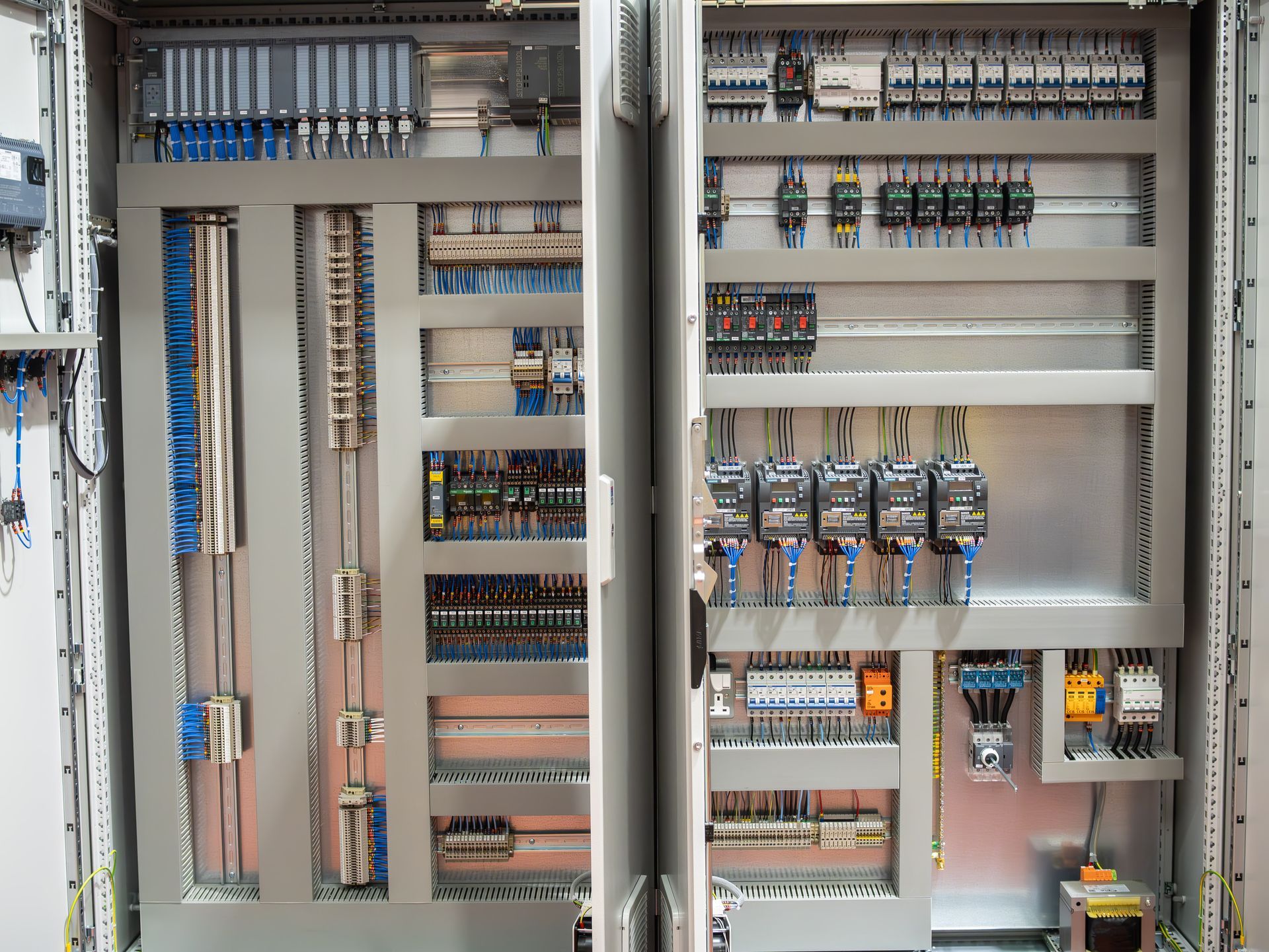
We produce electrical drawings covering schematics, internal and external layouts, terminal arrangements and parts lists as part of its panel design process.
Why Does Component Selection Matter?
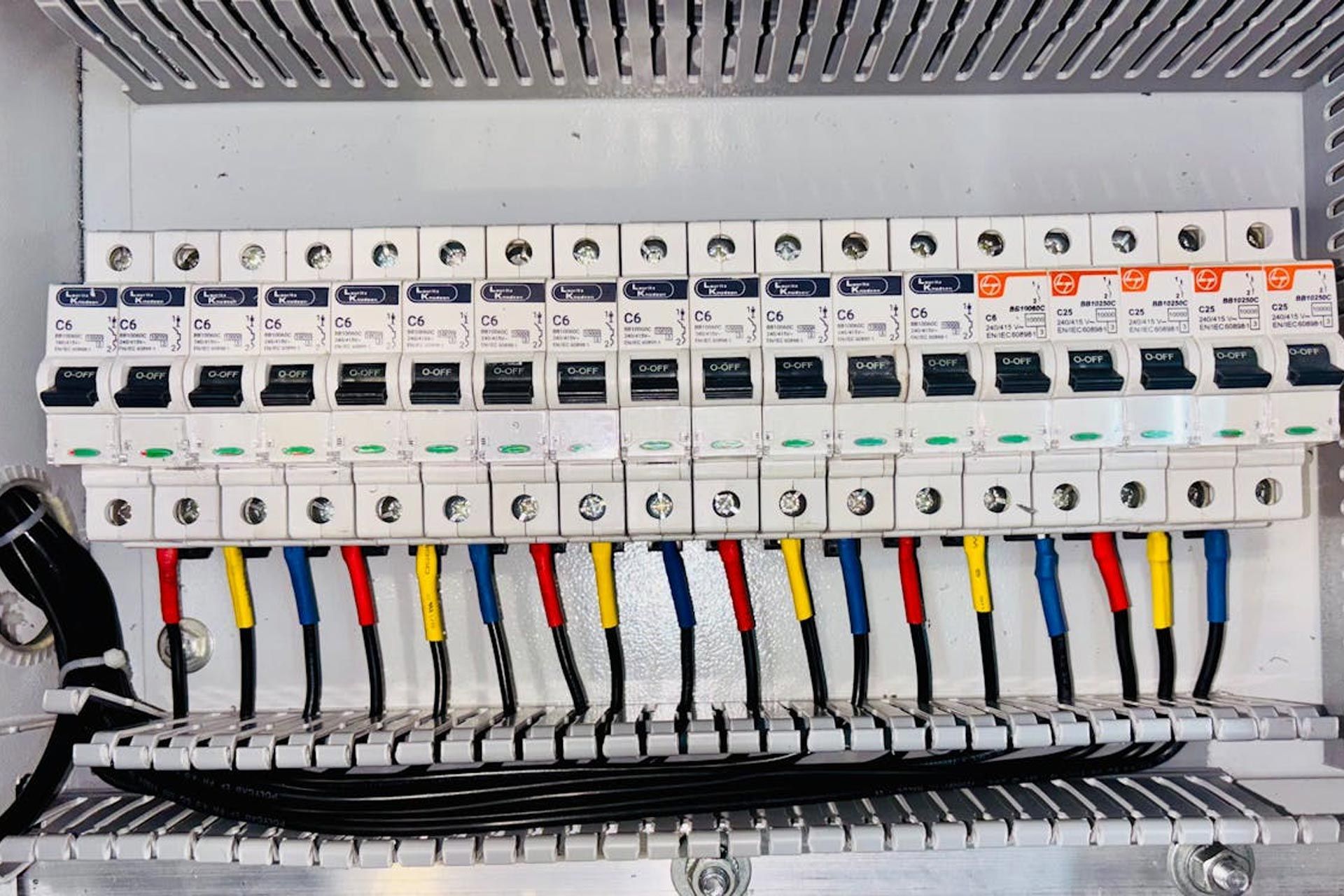
A panel is assembled from many individual parts, including isolators, circuit protection, contactors, relays, drives, power supplies, and programmable controllers.
Using compliant individual components is important, although it does not automatically establish compliance for the completed panel. The way those components are combined and used also needs to be considered.
A power supply might be suitable on its own, for example, while poor ventilation within the enclosure could cause temperatures to rise beyond acceptable operating conditions. Similarly, electrical components installed too closely together could make maintenance difficult or affect heat dissipation.
Good control panel board design therefore considers the completed assembly rather than treating compliance as a collection of individual component certificates.
What Testing Takes Place Before a Panel Is Supplied?
The type and extent of testing will depend on the panel and the requirements that apply to it. Typical checks may cover wiring against drawings, protective circuits, insulation, terminals, component operation and functional sequences. Where motor starters, PLCs or safety systems are involved, the builder may also check how the control logic responds to inputs, faults and emergency conditions.
Electromagnetic compatibility can also be relevant. UK regulations require applicable equipment to be designed and manufactured so that electromagnetic disturbance does not prevent other equipment from operating as intended and so that the equipment itself has an appropriate level of immunity.
Testing before dispatch can also uncover very ordinary problems, such as an incorrect terminal connection or component setting, before they become much more inconvenient during commissioning.
What Documentation Should Support the CE Mark?
Government guidance requires manufacturers to prepare relevant technical documentation as part of the conformity process. Depending on the applicable requirements, this can include drawings, specifications, risk assessments, standards used, and evidence showing how the equipment has been assessed.
A Declaration of Conformity identifies the equipment and the legislation or requirements against which conformity has been declared.
For the customer, accurate drawings and component information also have a practical value long after installation. If a component fails several years later, maintenance engineers need to know what was fitted and how it was connected.
Who Is Responsible When the Panel Forms Part of a Larger Machine?
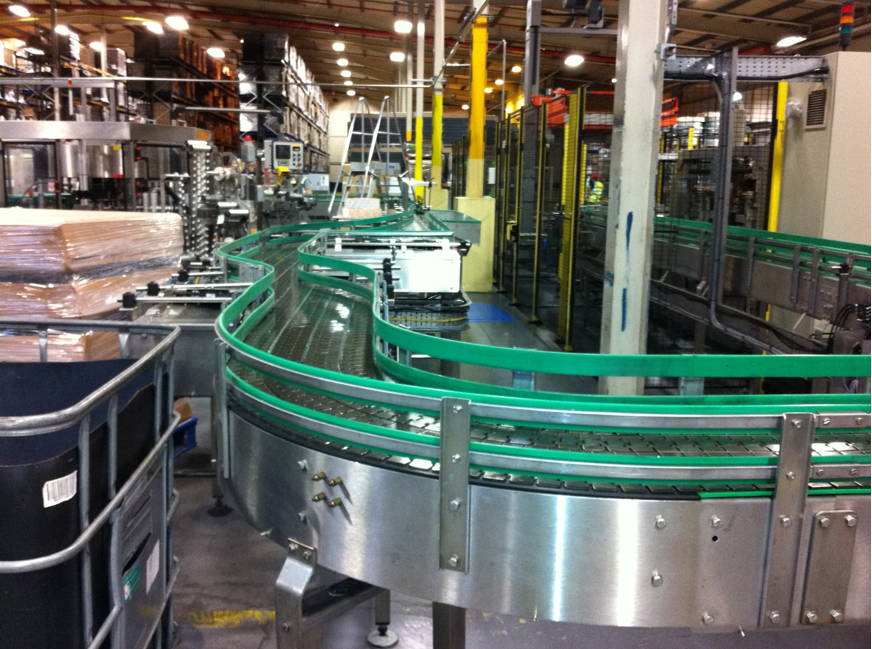
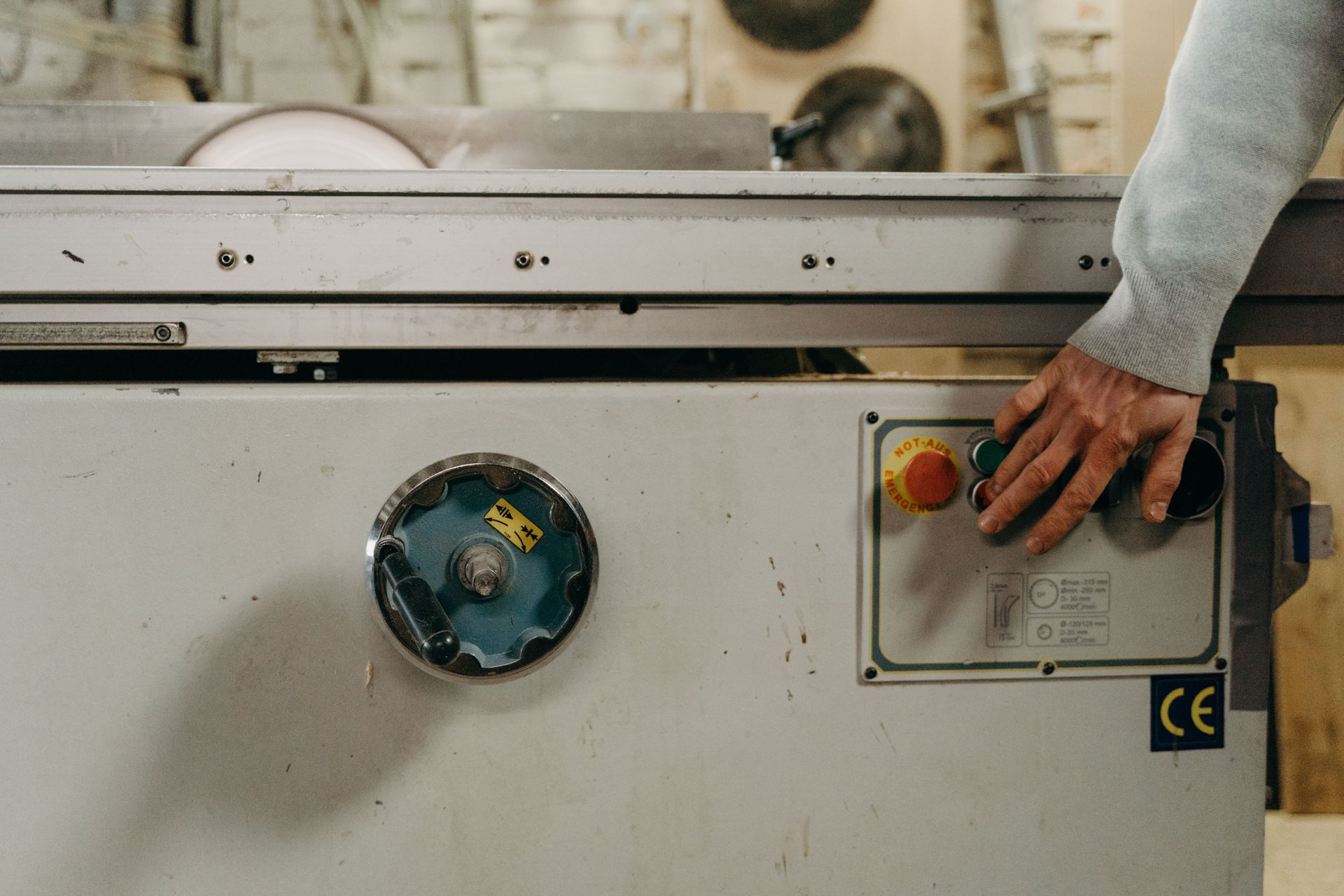
A control panel may be supplied as part of a much larger piece of machinery or production system. In those situations, responsibility for conformity needs to be established across the completed machine, rather than assuming the marking on an individual panel covers everything connected to it.
Government guidance confirms that the manufacturer of a finished product has responsibility for ensuring the overall product complies with the applicable requirements before it is placed on the market.
This is why control panel manufacturers, machine builders, and system integrators often need to exchange drawings, specifications and safety information throughout a project.
Why Should Businesses Pay Attention to CE Marking?
For the end user, CE marking provides a useful indication that a formal conformity process has been followed, but businesses should also consider the documentation, design quality and testing behind the mark.
A well-documented control panel is easier to commission, troubleshoot, maintain, and modify safely. If machinery changes several years later, accurate information also gives engineers a much clearer starting point for assessing whether modifications affect the original compliance position.
CE marking therefore works best when it is treated as part of the engineering process from the beginning, rather than as a label added when the panel leaves the workshop.
Does an Electrical Control Panel Need CE Marking in the UK?
It depends on the equipment, how it is supplied and where it is being placed on the market. In Great Britain, both CE and UKCA markings are currently recognised for relevant electrical equipment where the applicable requirements are satisfied.
Is CE Marking the Same as Independent Testing?
No. Some conformity procedures can be completed through manufacturer self-declaration, while certain product categories may require third-party assessment. The applicable legislation determines the required process.
Can a Control Panel Carry Both CE and UKCA Marks?
Yes, in circumstances where the relevant requirements for both markings have been satisfied.
What Is Included in a Control Panel Technical File?
Depending on the applicable requirements, documentation may include electrical drawings, equipment descriptions, design information, standards used, assessment records and evidence supporting conformity.
Does CE Marking Cover the Whole Machine?
A CE-marked control panel does not automatically establish conformity of every machine or system into which it is installed. The completed equipment needs to be assessed against the requirements that apply to the finished product.